
 Share
Share 


Prediction market activity has picked up in 2026 as traders track major international events. Global elections are a central focus, with several countries heading to the polls this year. Most prediction platforms already offer contracts tied to these elections. This guide highlights the most popular election markets in 2026.
1. Colombian presidential election
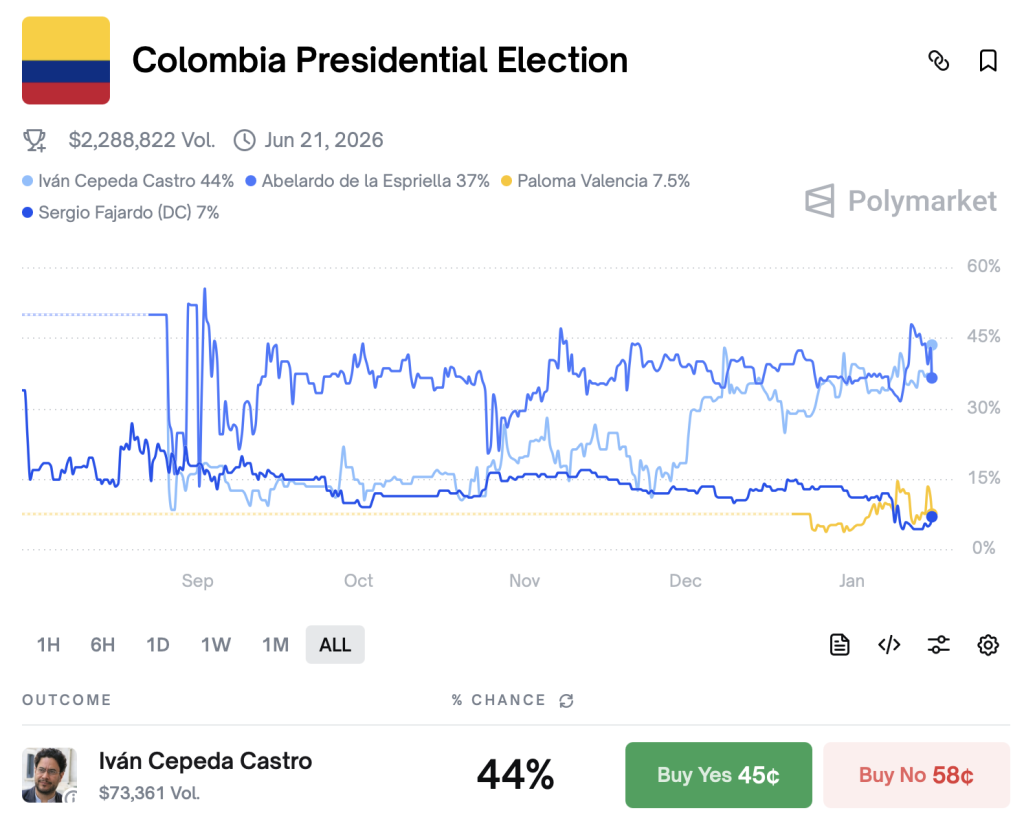
The 2026 Colombian presidential campaign is among the most traded markets this year. The election, scheduled for May 31 (with a possible runoff in June), has drawn global attention. Colombia’s significance in Latin America, combined with its role as a key US partner in trade, security, and migration, helps explain the heightened interest.
Prediction markets show several candidates with active pricing. Abelardo de la Espriella currently leads, though Iván Cepeda Castro and Sergio Fajardo also have significant support. Observers watch Colombia’s elections closely, as the outcome will indicate whether the country shifts toward pro-business, security-focused governance or adopts more progressive domestic policies. Colombia’s borders and partnership with the US in counter-narcotics and democratic stability give the results implications beyond the region.
2. Colombian legislative elections
Traders are also monitoring Colombia’s legislative elections for the Chamber of Representatives and Senate, scheduled for March 2026. These results will shape the executive’s power and the ability of governing coalitions to assemble.
Most platforms offer separate markets for party control of each chamber, giving traders flexibility in forecasting the country’s political future. For US observers, the makeup of Colombia’s Congress matters for social policy, foreign investment, and cross-border issues such as climate change.
3. Costa Rican general elections
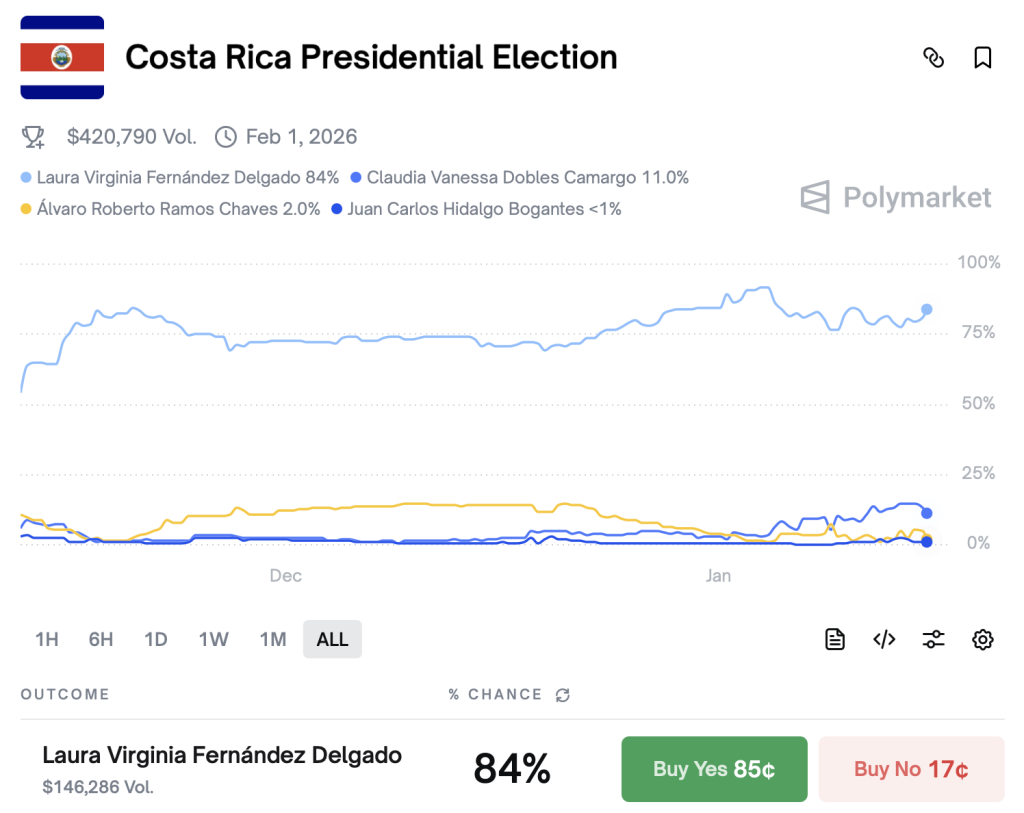
Costa Rica’s elections in February 2026 are attracting attention for the country’s democratic stability and leadership in conservation. Outcomes are closely watched by those interested in climate change, regional diplomacy, and sustainable development.
In the presidential race, Laura Virginia Fernández Delgado currently leads prediction markets, followed by Álvaro Roberto Ramos Chaves and Andrés Ariel Robles Barrantes. Legislative elections will follow next year, with the PPSO party holding strong market support. Other prominent parties include PLN, PUSC, and PPSD. Traders are positioning ahead of the elections, reflecting expectations of shifting political dynamics.
4. Portuguese presidential election
Portugal’s presidential election draws interest in global markets due to the country’s role in the European Union and NATO. Though the presidency is largely ceremonial, the office influences EU discussions and signals broader political trends. Contracts tied to the election show notable volume, suggesting international traders view the outcome as significant for EU-US relations, trade agreements, and military cooperation.
5. Swedish parliamentary election
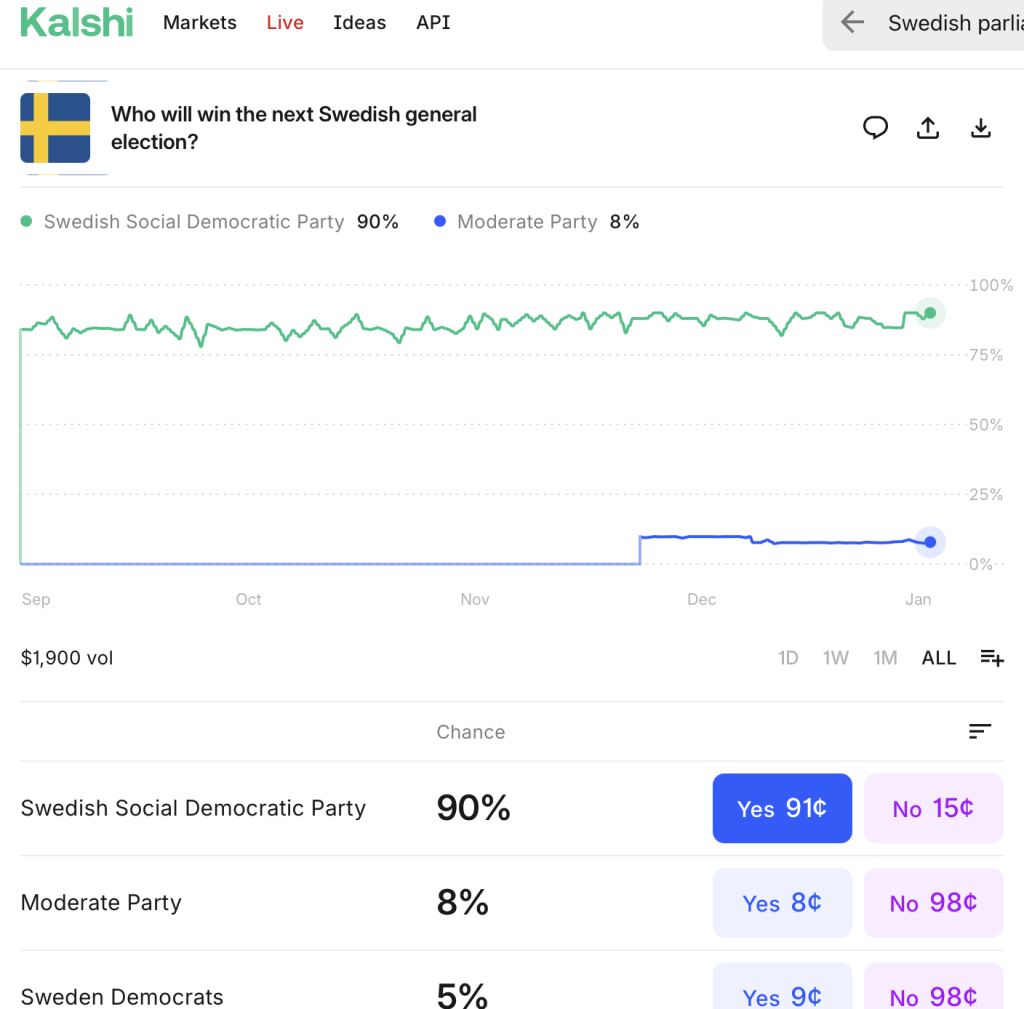
Sweden’s parliamentary election on Sept. 13, 2026, is notable for the country’s influence within the EU and NATO. Sweden is a key partner in defense and sustainable technologies, making its political trajectory relevant to transatlantic ties and EU policy.
The Social Democratic Party currently dominates prediction markets, while the Sweden Democrats and Moderate Party also maintain substantial support. The election outcome will indicate whether voters favor progressive policies—such as expanded welfare and aggressive climate action—or more conservative approaches.
6. US midterm elections
Control of the US House in the November 2026 midterms remains a hot topic in prediction markets. Party control affects fiscal policy, infrastructure investment, and regulatory oversight.
Market assessments currently favor Democratic control, with probabilities ranging from 70% to 80%, reflecting historical patterns that often favor the out-of-power party. Republicans remain competitive, with estimated chances around 20% to 30%. Outcomes will depend on voter turnout and key districts.
7. Hungarian parliamentary election
Hungary’s parliamentary election in April 2026 draws market interest due to its EU and NATO role and energy ties with Russia. Leadership changes affect EU budgets, border controls, and transatlantic cohesion. Péter Magyar leads market forecasts, challenging patterns with his centrist-right platform. Current Prime Minister Viktor Orbán remains a close second, while Klára Dobrev and László Toroczkai hold smaller but active positions.

8. Brazilian presidential election
Brazil’s presidential election in October 2026 is among the busiest markets, reflecting the country’s role as Latin America’s largest economy and a US partner in commerce, environmental protection, and continental defense.
Incumbent Luiz Inácio Lula da Silva leads in markets, while Flávio Bolsonaro and Tarcísio de Freitas offer conservative alternatives. Romeu Zema and other candidates also draw attention. The election could influence US-Brazil cooperation on narcotics control and clean energy.
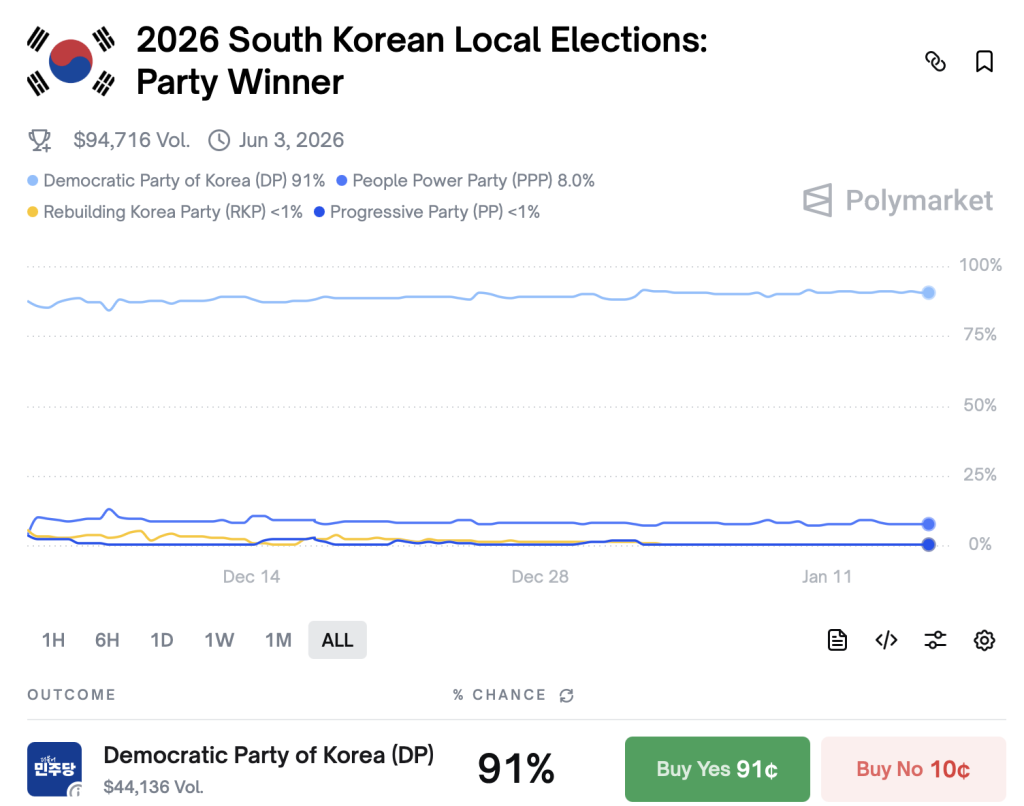
9. South Korean local elections
South Korea will hold local elections in June 2026, including governor and mayor races. While not presidential, these contests provide insight into national political trends. South Korea’s role as a US partner in defense, semiconductors, and regional security makes local outcomes significant for international relations. Traders use these elections to gauge political sentiment ahead of the next presidential cycle.
The strategic importance of election prediction markets
- Geopolitical influence: Elections in Colombia, Costa Rica, Portugal, South Korea, and beyond shape trade, security, migration, and supply chains, affecting US economic and foreign policy.
- Pricing risk and opportunity: Markets provide real-time probability estimates that reflect evolving sentiment, not just static poll results.
- Hedging investments and policy decisions: Multinational companies, hedge funds, and policymakers use election markets to manage political risk, from regulatory changes to tariff negotiations.
- Aggregating data: Markets incorporate diverse opinions, offering dynamic insights beyond traditional polling.
What election markets tell us about 2026 political trends
As elections approach, prediction markets are seeing increased activity. Traders use them not only to forecast outcomes but also to track broader geopolitical and economic signals. For those monitoring political risk, these markets provide a direct window into major decisions shaping global politics in 2026.