


 Share
Share 



State of Play’s TL;DR
- At G2E, tribal leaders and the AGA said opposition to prediction markets is strengthening.
- California tribes are organizing ahead of a possible 2028 online sports betting push.
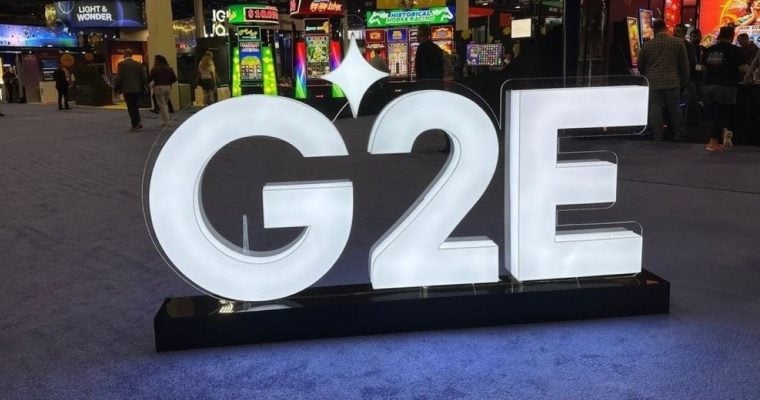
Tribal leaders and the American Gaming Association said at G2E in Las Vegas that their opposition to prediction markets is becoming more coordinated, with California remaining a key front in that fight.
Speakers on a Main Stage panel argued that sports event contracts offered by companies such as Kalshi cut into state and tribal gaming revenue and should not be treated as lawful gambling alternatives.
The panel, titled “The Power of Unity: Confronting the Prediction Markets Challenge,” included AGA President Bill Miller, tribal advocate and political strategist Holly Cook Macarro, California Nations Indian Gaming Association Chair James Siva, Indian Gaming Association Chair David Z. Bean, and IGA Executive Director Jason Giles.
California tribes part of broader anti-prediction market coalition
The California angle was central to the discussion. According to In Game, two Ninth Circuit panel decisions involving Nevada and two California tribes were described as wins for states or tribes, while CNIGA is also building a coalition in California ahead of a potential 2028 online sports betting initiative.
Siva said early court losses had made it seem like prediction market operators had momentum, but recent rulings have shifted that picture. The article also cited three circuit court rulings favoring states or tribes overall, including a Sixth Circuit decision involving Ohio and Tennessee regulators.
Cook Macarro said the current coalition between tribal and commercial gaming interests marks a major change from earlier years, when tribes were not fully included in national industry efforts. Panelists repeatedly framed unity as the industry’s main response to prediction markets.
Panelists criticize regulators and dispute tribal-Kalshi partnership
Speakers also criticized federal regulators, especially the Commodity Futures Trading Commission and the National Indian Gaming Commission (NIGC). Bean said the federal government was not looking out for tribes, while Giles questioned why the NIGC had remained silent despite what panelists described as illegal gambling activity.
The discussion also touched on a Louisiana tribe’s mid-September partnership with Kalshi. Panelists said that arrangement did not change their legal view of sports event contracts.
Giles said:
“A tribe participating in this illegal activity does not make it legal overnight.”
One figure highlighted during the panel was an estimated $5.736 billion in year-to-date sports betting volume driven by 18- to 20-year-olds on Kalshi.
Based on reporting by Jill R. Dorson for In Game.