
 Share



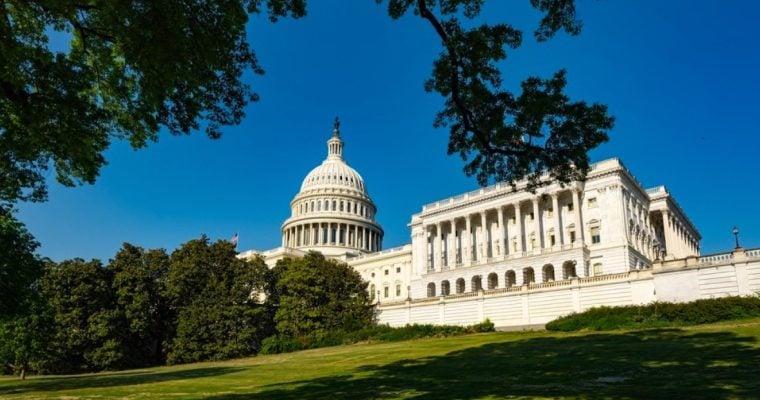
The US Senate has unanimously approved bipartisan legislation targeting prediction market contracts involving war, terrorism, assassination and individual deaths. The DEATH BETS Act would establish explicit federal restrictions on these trades, marking the first prediction market regulation bill to pass the Senate during the 119th Congress.
Passed on Nov. 19, the measure now heads to the House of Representatives, according to news from Legal Sports Report. However, it does not resolve the separate legal dispute over sports prediction markets, which remains ongoing.
Senate moves to prohibit contracts involving violence
Democratic Sen. Adam Schiff of California and Republican Sen. John Curtis of Utah sponsored the legislation, which passed by unanimous consent after the Senate adopted a substitute amendment.
The bill would amend the Commodity Exchange Act, prohibiting entities registered with the Commodity Futures Trading Commission (CFTC) from listing or accepting for clearing contracts that explicitly reference terrorism, assassination, war or US Armed Forces military operations. The prohibition would also extend to similar activities identified by the CFTC through future regulations.
Importantly, the legislation covers contracts reasonably expected to resolve primarily upon an individual’s death, even when the contract does not explicitly mention death. This provision is intended to prevent exchanges from avoiding restrictions through carefully worded contract descriptions.
Under existing federal commodities law, the CFTC can prohibit certain event contracts if it determines they are contrary to the public interest. The DEATH BETS Act would establish specific statutory restrictions rather than leave these decisions entirely to the regulator.
“These markets are operating in a Wild West desperately in need of regulation and guardrails,” Schiff said during Senate floor remarks.
Curtis similarly emphasized the distinction between legitimate financial activity and contracts connected to human tragedy.
“No one should be able to wager on terrorism, war, or the death of another human being,” he said.
The bill’s passage does not make it law. It must still clear the House and receive the president’s signature.
Controversial trades increase pressure for action
Lawmakers have pointed to prediction market activity involving military operations and political violence as evidence of the need for stronger restrictions.
One prominent example involved contracts on Venezuelan President Nicolás Maduro’s removal from power ahead of his capture by US forces in January 2026. A trader reportedly made more than $400,000 through Polymarket after placing positions before the operation.
In April, the Justice Department charged US Army soldier Gannon Ken Van Dyke with allegedly using classified information to profit from those contracts. Prosecutors said his involvement in planning the operation gave him access to information unavailable to other traders and that he earned approximately $409,881 through Venezuela-related positions. The allegations remain subject to criminal proceedings.
The case raised concerns about whether people with privileged information could exploit prediction markets to profit from national security operations.
Schiff also cited contracts involving the war in Ukraine and the safety of American astronauts. Other examples discussed during the Senate debate included wagers on whether Russia would capture the Ukrainian town of Myrnohrad and whether the Artemis II mission would end in disaster.
For supporters of the legislation, these markets raise concerns beyond financial speculation, particularly when they create incentives to profit from events involving violence or loss of life.
Sports prediction markets remain outside the bill
Although the DEATH BETS Act targets controversial event contracts, it does not prohibit sports prediction trading or settle the legal status of other event contracts.
The Senate adopted a rule of construction explicitly stating that the legislation does not affect the permissibility of other contracts under existing federal or state law. It also makes clear that the bill should not be interpreted as granting the CFTC additional authority to regulate sports contracts.
This distinction matters because operators such as Kalshi have faced legal challenges over sports contracts in multiple states.
The CFTC argues that federal law gives it authority over exchanges registered under the Commodity Exchange Act. State and tribal regulators maintain that sports contracts can constitute gambling and should comply with their respective restrictions.
Federal appeals courts have reached conflicting conclusions about the scope of federal authority and whether federal derivatives law preempts state gambling regulations. The DEATH BETS Act does not resolve those disputes.
Schiff and Curtis have separately introduced the Prediction Markets Are Gambling Act, which would address sports betting and casino-style contracts on federally regulated exchanges. Keeping that broader debate separate allowed the Senate to focus on contracts involving violence, military operations and death.
House approval is the next hurdle
The legislation now moves to the House, where Representative Mike Levin of California has introduced a companion bill. The Senate-approved measure was transmitted to the House on Nov. 20, but it still requires House approval before it can reach the president.
Meanwhile, disagreements between lawmakers and the CFTC continue over the availability and regulation of sports-related event contracts. Nine Democratic senators recently urged the commission to withdraw guidance concerning geographic restrictions on prediction markets. They argued that removing those restrictions could conflict with court orders and undermine state and tribal gambling regulations.
The CFTC has defended its federal authority and pursued litigation against states attempting to restrict registered exchanges.
For now, the Senate vote represents a bipartisan effort to establish federal limits on prediction markets involving war, terrorism, assassination and death. Whether those restrictions become law will depend on further congressional action.