




 Share
Share 



You don’t need to love basketball to get pulled into March Madness. You don’t even need to watch a full game. By mid-March, the NCAA tournament stops being just about sports; instead, it transforms into a cultural event with universal appeal. Unsurprisingly, talk about the tournament soon takes over office chats, family group texts, bars and the quiet 10 minutes before meetings start.
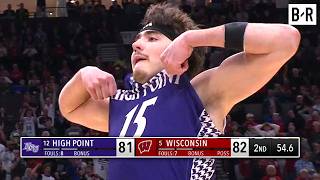
The 2026 tournament began March 19 and wasted no time delivering thrilling action. No. 12-seeded High Point claimed a shock win by defeating No. 5 Wisconsin. Top-seeded Duke also had a scare, trailing No. 16 Siena by as many as 13 points before rallying in the final five minutes to win 71-65.
Our guide breaks down everything you need to know about this tournament. We consider the stuff worth paying attention to if you are not really into basketball.
How to talk about March Madness
The trick is simple: Talk about emotion, not tactics. You can get through most March conversations with a few safe lines: “That’s what makes this tournament different.” “Nobody’s bracket survives the first weekend.” “All anyone wants is one big upset.” None of that is fake. It is the whole event in one sentence.
If someone brings up a team, ask one easy question: “Are they built to make a deep run, or are they simply a team that looked good on paper?” That is the question that matters every March. People agonize over their brackets for days, convinced they have cracked the code. On many occasions, one shocking loss ends everyone’s expectations.
That already happened this year. High Point’s 83-82 win over Wisconsin wiped out the perfect-bracket dream for millions of fans within the first few hours. According to the NCAA’s 2026 bracket tracker, only 14,000 (0.039%) of all brackets are still perfect after the early wave of games.
March Madness upsets and buzzer beaters
Most people are not breaking down rebounding rates. They are watching for three things: upsets, buzzer-beaters and general disorder.
Upsets matter because they make the whole bracket feel fragile. A No. 12 seed over a No. 5 seed is the classic March plot twist, and High Point delivered that right away. Duke’s near-loss to Siena told the same story: No team is ever as safe as the bracket suggests. Even when the favorite survives, people remember the panic.
Buzzer-beaters are the clips everyone sees, even if they missed the game. They stick with you even if you don’t know a single player on the roster. You just need the shot, the crowd and one person yelling into a phone.
Chaos is the real star, though. March Madness earns its name because it makes even casual viewers feel like something strange could happen in the next two minutes. One bad stretch, one hot shooter or one missed free throw, and a team that looked safe suddenly looks weak. That is the tournament’s social value, and it gives everyone a shared surprise.
Navigating the bracket: Strategy vs. pure luck
Office pools are simple. Everyone picks who they think will win each round before the games start. Points are awarded based on correct picks, and later rounds are worth more points.
Here is what actually happens: The first weekend destroys everyone equally. By Sunday, some quiet person in accounting who picked teams based on mascots is somehow in first place. The sports fan who spent three hours researching stats is in last.
There are two bracket strategies worth knowing. The first is to pick the favorites and hope they hold. The second is to pick one or two upsets early to stand out from the crowd. Most experts suggest picking one upset per region in the first round, then backing the favorites the rest of the way.
And no, perfection does not last. The odds are brutal. The NCAA has said a perfect bracket is essentially impossible. Estimates range from 1 in 9.2 quintillion if you guess every game like a coin flip to about 1 in 120 billion if you make informed picks.
That is why the smart office-pool attitude is not “I am definitely winning.” It is “I just need to stay alive through the first weekend.”
While office pools are the traditional way to play, the rise of online sports betting has led many to look for “prop bets”—wagers on specific events like how many 3-pointers a player will make—adding another layer to the March madness.
Minimum viable watch guide: 2026 tournament schedule
If you want the smallest time investment with the biggest payoff, here is the move: Watch some of the first Thursday and Friday afternoon games. That is when the bracket still feels wide open and the first weird result stings the most. The first round this year runs from March 19 to March 20.
Then come back for the second round on Saturday and Sunday, March 21 and 22. By then, the stories are cleaner. The real contenders start to separate, and the “Cinderella” teams start building an audience.
After that, you can be selective. Watch the Sweet 16 and Elite Eight only if a close game is happening late. Then make sure you are around for the Final Four on April 4 and the title game on April 6 in Indianapolis. Those games air on TBS.
If you only watch one thing all tournament, watch the final five minutes of any game that is within one or two possessions. That is where March Madness earns its reputation.
Where to watch (without a cable subscription)
All 67 games air across CBS, TBS, TNT and truTV. If you have cable, you already have access. Without cable, you can stream the men’s tournament games through Paramount+ Premium, which carries CBS games. Max carries TBS, TNT and truTV games. Live TV services like DirecTV, Hulu + Live TV and Sling also carry all four channels.
The March Madness Live app streams every game in one place. It is the cleanest option if you want to bounce between games without flipping channels. The championship game takes place April 6 at Lucas Oil Stadium in Indianapolis.
2026 Favorites: Why Duke, Michigan, and Arizona lead the pack
Start with the No. 1 seeds: Duke, Michigan, Arizona and defending champion Florida. Officially, they are on the top line of the bracket.
As for who people trust most, Duke entered the tournament as the betting favorite at many online sportsbooks, followed by Michigan and Arizona. Despite being a No. 1 seed and the reigning champion, Florida is noticeably behind the top three on the betting board.
After those four, the bracket opens up, and that is when March Madness starts embarrassing people who thought they had it figured out. That is the whole point, really. March Madness is one of the few events where confusion is not a bug; it’s the feature.