


 Share
Share 



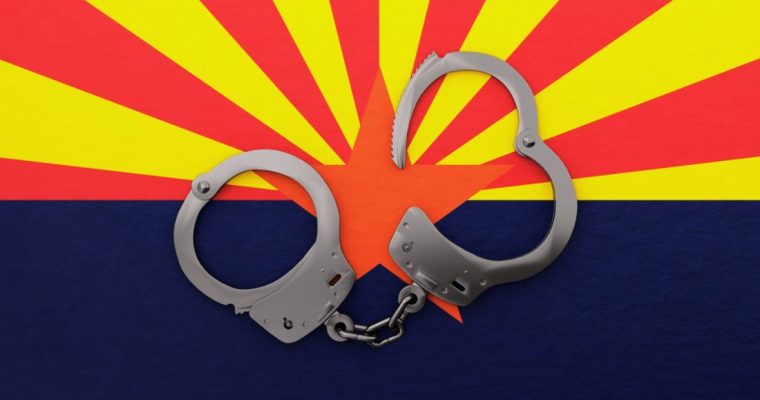
Arizona has taken the most aggressive step yet against the prediction market industry, filing criminal charges against Kalshi and accusing the platform of operating an illegal gambling enterprise.
The move by Attorney General Kris Mayes marks a significant escalation in the conflict between state regulators and prediction market operators, pushing the debate beyond cease-and-desist letters and into the realm of criminal enforcement.
As prediction markets expand across the US, Arizona’s action signals that some states are no longer treating the industry as a legal gray area.
The state’s case: Illegal wagering alleged
According to a 20-count criminal information filed in Maricopa County Superior Court, Kalshi’s event-based contracts tied to sports outcomes and political races violate state gambling laws.
The state’s core argument is that while these products are structured as financial contracts, they function as wagers. Specific charges include:
- Unlicensed Wagering: Allegations that Kalshi accepted bets on professional and collegiate sports without a state gaming license.
- Election Betting: Arizona law strictly prohibits wagering on elections. The state alleges Kalshi allowed bets on the 2026 gubernatorial race and the 2028 presidential election.
“Kalshi may brand itself as a ‘prediction market,’ but what it is actually doing is running an illegal gambling operation,” Mayes said in a statement.
Kalshi’s defense: Federal preemption and the CFTC
Kalshi maintains that its products fall under federal oversight as derivatives contracts regulated by the Commodity Futures Trading Commission (CFTC).
The company argues that federal law takes precedence over state gambling statutes. Shortly before the charges were filed, Kalshi initiated a federal lawsuit seeking to enjoin Arizona from enforcing these laws. However, a federal judge recently denied Kalshi’s request for a temporary restraining order, forcing the company to face the state-level charges for now.
A growing national conflict
Arizona’s action is part of a broader, multi-front battle:
- Nevada and Utah: In mid-March 2026, Nevada gaming regulators successfully secured a temporary ban on Kalshi’s operations, while Utah’s governor pledged to sign legislation explicitly outlawing the platforms.
- Congress: On March 23, Sens. Adam Schiff (D-Calif.) and John Curtis (R-Utah) introduced the “Prediction Markets Are Gambling Act,” a bipartisan bill that would ban CFTC-regulated platforms from listing sports or casino-style contracts.
- The CFTC: Conversely, CFTC Chairman Michael Selig has defended the industry, calling Arizona’s criminal prosecution “entirely inappropriate” and a jurisdictional overreach.
A defining moment for US prediction markets
This case is a defining moment for the “gambling vs. finance” debate. If Arizona’s approach is upheld, it could lead to a fragmented regulatory environment where platforms must navigate different rules in every state—similar to the current sports betting landscape.
If Kalshi successfully argues that federal oversight preempts state law, it could accelerate the growth of the industry by providing a single, unified regulatory framework.
For users, the immediate result is uncertainty. As of late March, access to certain markets remains in flux as courts decide whether these platforms are the future of forecasting or simply a new way to bet.