
 Share
Share 



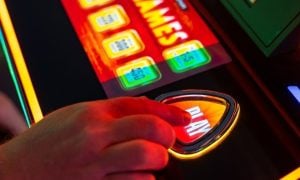
State authorities seized 26 electronic betting machines from Santa Anita Park less than two days after they debuted, prompting the Arcadia racetrack to sue California regulators over whether the games violated state gambling laws.
Santa Anita argues the machines offered legal pari-mutuel wagers on historical horse races, while state officials say they crossed into casino-style gaming prohibited outside tribal casinos. The dispute is now before a Los Angeles court, with the machines held in state custody and facing possible destruction.
Two days, 26 machines, a lawsuit
Each terminal allowed players to place a $1 wager on a three-race sequence. Players selected the first-, second-, and third-place finishers in each race without knowing the outcomes at the time of the wager. According to the lawsuit, the betting format complies with California laws governing pari-mutuel wagering on horse racing.
Investigators from the California Department of Justice disagreed. Within 48 hours of the machines going live, officers seized all 26 terminals and removed cash from the machines. Santa Anita says it received no warning.
In its court filing, Santa Anita’s operator, the Los Angeles Turf Club, argues the seizure was abrupt and unnecessary. The lawsuit cites an April 2024 approval by the California Horse Racing Board of the wager type used by the machines and says the track spent months discussing the concept with regulators. The track also submitted legal opinions asserting the machines complied with California gambling laws.
According to the filing, regulators never instructed Santa Anita to halt deployment, which the track says it interpreted as acceptance. The lawsuit also questions the seizure process, alleging that while officers provided documentation for the machines, a full accounting of the cash taken was not provided.
Tribal gaming rights collide with innovation
California officials have tied the seizure to broader gambling restrictions that extend beyond horse racing.
Under long-standing agreements, Native American tribes hold exclusive rights to most casino-style gaming in California, including slot machines and similar electronic games.
State regulators and tribal representatives argue the Racing on Demand terminals looked and operated too much like slot machines, regardless of how the wagers were structured. Tribal leaders welcomed the state’s response, warning that allowing such machines at racetracks would erode boundaries established by gaming compacts that have governed California gambling for decades.
Racetrack bets could vanish overnight
The legal stakes escalated when the attorney general’s office notified Santa Anita that the machines could be destroyed within 30 days unless a court intervenes.
Santa Anita has asked the court to block that action, arguing destruction would permanently eliminate evidence central to the case. The track is also seeking the return of the machines and a ruling that their operation was lawful. The machines remain in state custody as the court considers next steps.
Parimutuel betting aims to boost California’s racetracks
The dispute is being closely watched by California’s racing industry, which has struggled to maintain wagering levels amid increasing competition for gambling dollars nationwide.
Tracks in other states have turned to historical horse racing and other electronic pari-mutuel formats to attract casual players. In California, similar efforts have repeatedly encountered regulatory and political resistance.
Voters rejected a significant expansion of sports betting in 2022, a campaign strongly opposed by tribal gaming groups. That vote reinforced limits on gambling expansion in the state.
Santa Anita’s lawsuit does not seek to expand gambling in California but challenges how existing rules apply to new betting technology.
When legal wagers face legal limits
The case ultimately turns on a narrow issue: whether a wager that is legal in substance becomes illegal because of how it is presented.
Santa Anita argues the wagers were lawful pari-mutuel bets approved in advance. State officials and tribal representatives say the machines’ appearance and function cannot be separated from their legal classification.
The court’s ruling could clarify how far racetracks can go when introducing new betting products — or reinforce the strict limits that have defined California gambling for years.