



 Share
Share 



State of Play’s TL;DR
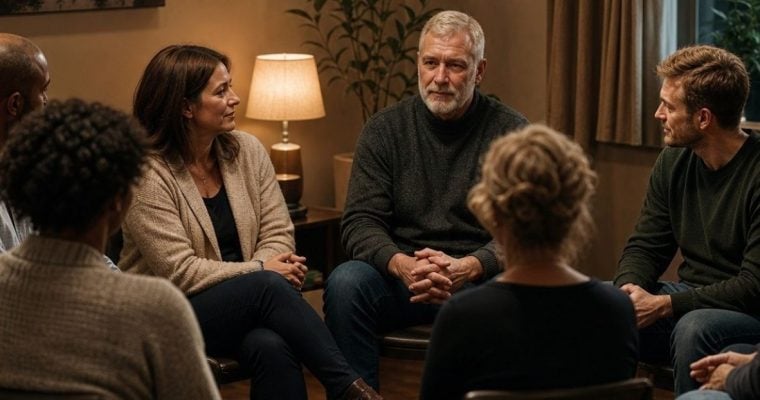
- Illinois’ problem gambling safety net is still patchy, and recovering gamblers are increasingly relying on each other to fill the gaps.
- A new report highlights how peer-led support, from Gamblers Anonymous meetings to a recovery podcast, is doing work that formal treatment systems often do not.
Reporting from Capitol News Illinois and Illinois Answers Project examines how people in recovery are building support networks in Illinois while formal resources lag.
The story centers on Gamblers Anonymous, the 12-step program founded in the 1950s, and on the podcast “Gambling Recovery: Taking Back Your Life,” launched in February 2025 by Jimmy M. with counselor Sam Sherman.
The podcast airs every other week and features people in recovery, family members, counselors, journalists, and lawmakers. It now draws more than 2,000 monthly downloads across 90 countries. Jimmy said he started it after finding that gambling-related podcasts often focused on how to win, not how to stop. As one GA member, Dave K., put it:
“A lot of people are looking for hope … they feel helpless.”
The reporting also points to structural gaps. Many GA members add individual counseling, but gambling-certified therapists in Illinois are limited. Insurance usually does not cover gambling treatment unless a person also has an alcohol or drug use disorder.
Gambling help marketing not keeping pace
The clearest takeaway is that access to help can be uneven even in a major market like Chicago. The article says there is at most one GA meeting a day within city limits on most days, with two on Wednesdays, and that large parts of the city, especially poorer South and West Side neighborhoods, lack nearby meetings. It also says there are no GA meetings in Chinatown.
The story ties those treatment gaps to communities already exposed to heavy gambling activity. Illinois Lottery data showed players in ZIP code 60619 bought more than $35 million in tickets last year, while one in four people there live below the poverty line. In Chinatown, the report says casinos have used Chinese-language billboards and bus shuttles to Bally’s Casino and Wind Creek Casino in East Hazel Crest, with more than 10,000 annual shuttle trips to Bally’s and another 2,000 to Wind Creek.
That does not create a neat operator-policy headline, but it does sharpen a broader industry question: When gambling is widely marketed and easily accessible, support systems need to be just as visible. The Illinois helpline is 1-800-GAMBLER, or players can text “GAMB” to 833234.
Based on reporting by Maggie Dougherty for Capitol City Now.