
 Share
Share 



Major League Soccer has taken one of the most severe disciplinary steps in its history. Following a comprehensive gambling investigation, MLS has permanently banned players Derrick Jones and Yaw Yeboah.
The league announced the punishments March 9 after investigators found both players placed extensive bets during the 2024 and 2025 seasons. These included wagers on their own teams.
The case comes as sports betting has become a cornerstone of the American sports industry. That growth has increased pressure on professional leagues to establish clear boundaries for athletes. With these lifetime bans, MLS has signaled a zero-tolerance policy regarding player gambling.
Investigation origins and MLS integrity monitoring
The league detected the misconduct through its network of integrity-monitoring partners, who flagged suspicious betting patterns. Upon receiving the alerts, MLS retained the law firm Patterson Belknap Webb & Tyler LLP to lead an independent investigation.
By October 2025, both Jones and Yeboah had been placed on administrative leave while the probe continued. At the time, MLS withheld the specific reasons for the leave. Monday’s announcement provided the first full accounting of the violations.
Evidence of spot-fixing and team wagering
During the 2024 and 2025 seasons, both players repeatedly bet on soccer matches. The league stated the bets included wagers on the players’ own teams, a violation that strikes at the core of the league’s integrity policy.
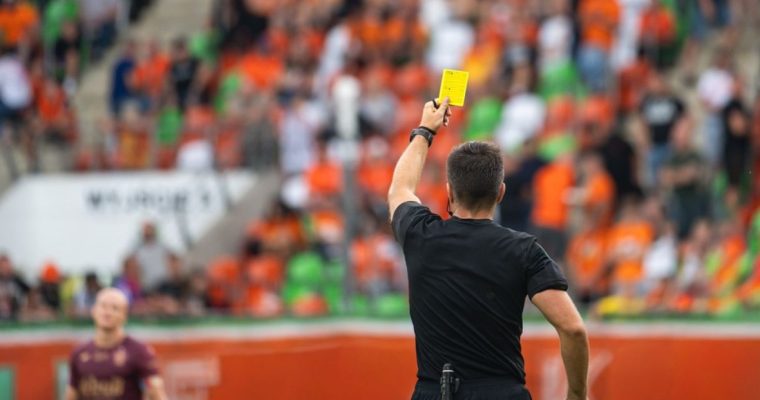
In one example cited by the league, Jones and Yeboah both wagered that Jones would receive a yellow card during Columbus’ 3-2 win over the New York Red Bulls on Oct. 19, 2024. Jones was, in fact, booked during that match.
The investigation also found the players likely passed confidential information to other bettors regarding their intent to be booked. MLS concluded they coordinated their actions to ensure the yellow-card outcome matched the wagers.
Note: Investigators found no evidence that the pair’s betting activity altered the final result of any match. However, the league maintained that the breach of ethics warranted the maximum penalty.
The players at the center of the scandal
Jones, 29, has had a journeyman career in MLS. He debuted with the Philadelphia Union in 2016, spending four years there before stints with Nashville SC, Houston Dynamo, and Charlotte FC. He joined the Columbus Crew for the 2024 season and is currently without a club.
Yeboah, 28, is a Ghanaian winger who joined the Crew in 2022. He moved to LAFC ahead of the 2025 season, but the club terminated his contract in January while the investigation was ongoing. He has since signed with the Chinese top-flight side Qingdao Hainiu. While the lifetime ban applies only to MLS, his eligibility with FIFA-affiliated leagues abroad remains a subject of scrutiny.
A pattern of misconduct in North American sports
This case follows several high-profile gambling scandals across North American sports:
- MLB: Handed Tucupita Marcano a lifetime ban in 2024 for wagering on baseball games, including those involving his own team, the Pittsburgh Pirates.
- NBA: Barred former Toronto Raptors forward Jontay Porter after he leaked insider information to bettors, a case that resulted in a federal wire-fraud plea.
- MLS: Previously terminated the contract of Sporting KC’s Felipe Hernandez in 2021 for betting on league matches.
Closing the “yellow card loophole” in betting markets
The Jones-Yeboah case has highlighted “spot betting”—such as wagering on yellow cards—as a specific vulnerability. Because an individual player can engineer a booking without significantly altering a game’s outcome, these markets are difficult for sportsbooks to police.
MLS is working to eliminate these options. Currently, 33 of the 41 US jurisdictions where sports betting is legal have agreed to remove yellow- and red-card markets. According to a Reuters report, the league continues to lobby the remaining states to follow suit.
MLS Commissioner Don Garber framed the effort as a necessity to protect the game for clubs, players, and fans alike. “The business may be expanding,” the league statement implied, “but the rules for participants remain absolute.”