



 Share
Share 



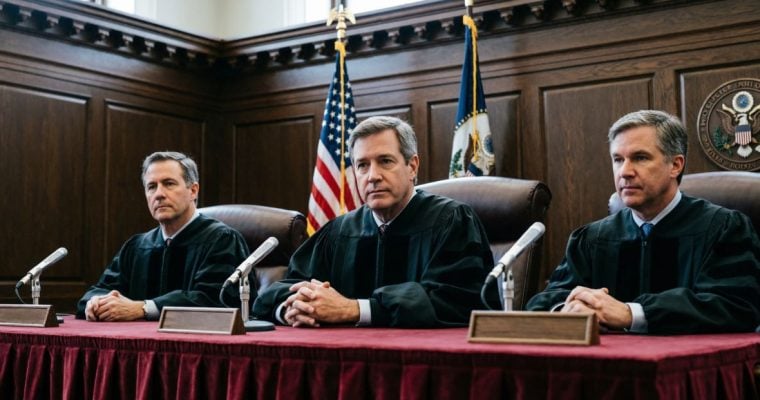
A three-judge panel of the US Court of Appeals for the Ninth Circuit signaled skepticism last week toward Kalshi’s argument that its sports event contracts — on its prediction market platform — can operate on tribal land without triggering federal Indian gaming law.
The July 10 hearing in Blue Lake Rancheria v. Kalshi left the panel’s decision undetermined, with no timeline set for a ruling.
Three California tribes — Blue Lake Rancheria, Chicken Ranch Rancheria of Me-Wuk Indians and Picayune Rancheria of the Chukchansi Indians — are asking the appeals court to reverse a district court’s November decision denying their request to block Kalshi and Robinhood from offering sports contracts on their reservations while the underlying lawsuit proceeds.
Tribes argue contracts amount to Class III gaming
Attorney Lester Marston, representing the tribes, told the panel that Kalshi’s contracts become Class III gaming under the Indian Gaming Regulatory Act the moment someone enters into one from tribal land.
He illustrated the point with a scenario: downloading the Kalshi app while physically present on Blue Lake Rancheria land. Under that circumstance, Marston argued, the transaction’s legal character changes, even though the same contract might be lawful elsewhere. He cited Supreme Court precedent holding that conduct legal off a reservation can become unlawful once it crosses onto one.
Marston described tribal gaming law as three connected layers: tribal ordinances that restrict gaming unless specifically authorized, tribal-state compacts that require compliance with those ordinances, and the argument that violating an ordinance therefore breaches the compact itself.
He used that framework to argue Kalshi cannot rely solely on oversight from the Commodity Futures Trading Commission to sidestep tribal authority, pointing to savings clauses in federal law that preserve tribal gaming protections.
A member of the panel appeared to agree that little distinguishes Kalshi’s contracts from conventional sportsbook wagers, noting that Kalshi’s own counsel had acknowledged the same bet would be prohibited through DraftKings.
Prediction markets press narrower arguments
Kalshi attorney Grant Mainland urged the panel to decide the case on standing grounds rather than issue a broad ruling on Class III gaming. He argued the tribes’ claims apply only to violations of specific compact or federal procedure language, none of which he said Kalshi had violated.
Mainland maintained that Kalshi’s contracts are not Class III gaming, though he conceded they bear some resemblance to online sportsbook wagers.
Robinhood attorney Anthony Ryan focused on the injunction standard itself, arguing the tribes had not shown irreparable harm or a meaningful loss of customers to Kalshi’s platform. Although the injunction targeted Kalshi, Ryan argued that restricting the exchange would also harm Robinhood’s own prediction market business.
Ninth Circuit ruling could resolve nationwide split
The dispute now sits alongside related fights nationwide. According to CryptoNews.net, a Wisconsin court found the Ho-Chunk Nation was likely to succeed on a similar Indian Gaming Regulatory Act claim against Kalshi, conflicting with the California district court’s ruling — a split that gives the Ninth Circuit’s eventual decision weight for prediction market operators well beyond the three tribes involved.
The underlying district court lawsuit remains on hold until the Ninth Circuit rules in this appeal and in a related Nevada case, and the court denied the tribes’ request in May to consolidate their appeal with the Nevada proceedings.
According to a post by DeFi Rate, District Judge Jacqueline Scott Corley‘s November ruling found that the Unlawful Internet Gambling Enforcement Act, rather than tribal gaming law, governed the transactions because that statute excludes contracts traded on CFTC-registered exchanges from its definition of a wager.
Corley declined to rule on whether Kalshi’s contracts are lawful under the Commodity Exchange Act, saying that question belongs to the CFTC.
Kalshi and Robinhood may continue offering sports contracts on tribal land while the appeal remains pending. A written ruling could take weeks or months.
The outcome could determine how far tribal sovereignty extends over federally regulated prediction markets operating within reservation borders, and it could shape similar disputes tribes are pursuing elsewhere.