



 Share
Share 



Fanatics has a gap to close in sports betting. Michael Rubin plans to buy his way across it.
The Fanatics CEO told Bloomberg the company could spend as much as $1 billion on betting and gaming marketing in 2027. This year’s budget is $350 million.
Legal Sports Report picked up the comments Friday. Rubin was blunt about where Fanatics sits: a distant third behind DraftKings and FanDuel.
As Rubin told Bloomberg:
“We’re going to spend a lot more money in marketing next year than we had thought we were going to spend because we’re saying how do we close the gap, and how do we really grow our market share.”
How much will Fanatics spend on sports betting ads?
The plan is $800 million in 2027. Maybe $1 billion.
At the low end, that’s about 2.3 times what Fanatics is spending this year. At the high end, nearly triple.
And Fanatics doesn’t have to ask anybody for permission. The company expects $2 billion in free cash flow this year and has about $1 billion in net cash with no debt, according to Bloomberg. A $1 billion ad budget would equal half of that cash flow.
That’s the advantage of being private. DraftKings answers to shareholders, and so does Flutter, FanDuel’s parent. Fanatics can move money from its other businesses into betting without a shareholder in sight.
Or a quarterly earnings call to explain it on.
Rubin said:
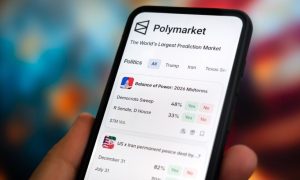
“The betting and gaming business will be more complicated in 2027 because you not only have the addition of Kalshi and Polymarket, but now you have the addition of Fanatics spending at the same level as FanDuel and DraftKings.”
Where legal sports betting has hit a wall
Fanatics Sportsbook is live in 23 states. Fanatics Casino runs in four.
Rubin said revenue “has hit a wall” in established markets like New Jersey, New York and Pennsylvania. The map isn’t growing fast, either. Legal sports betting covers 39 states plus Washington, D.C. Only seven states have legal online casinos, with Maine waiting to become the eighth.
So the growth has to come from somewhere else.
Fanatics found its way somewhere else in prediction markets. Fanatics Markets launched in December 2025, and it reaches states such as California, Florida, Georgia and Texas, where the sportsbook can’t operate.
“If we would have sat here a year ago and said what’s the chance of sports betting in California, Texas, Florida and Georgia, you’d say no chance,” Rubin said. “And here we are a year later, and we have it.”
Is it really sports betting in California and Texas?
Legally, no.
Sports event contracts fall under the Commodity Futures Trading Commission. States don’t license or tax them. California, Georgia and Texas still don’t have legal sports betting. Florida does, but that market belongs to Hard Rock Bet.
Georgia had a shot at changing that this year. H.R. 450, which would have let voters decide on sports betting, failed 63-98 on the House floor in March. It needed 120 votes.
Here’s the rub. A chunk of the gap Fanatics wants to close runs through states that haven’t legalized the thing Rubin is calling it.
Rubin said Fanatics has taken 10% of the betting market in three years. That’s real ground. It’s still a gap.
His read on why it closes:
“We did it better than what other companies were doing,” he said. “We made it better than DraftKings, better than FanDuel.”