





 Share
Share 



State of Play’s TL;DR
- New Jersey petitions the Supreme Court to review an appeals court ruling favorable to Kalshi.
- The request comes after another appeals court sided with Nevada against the prediction market company.
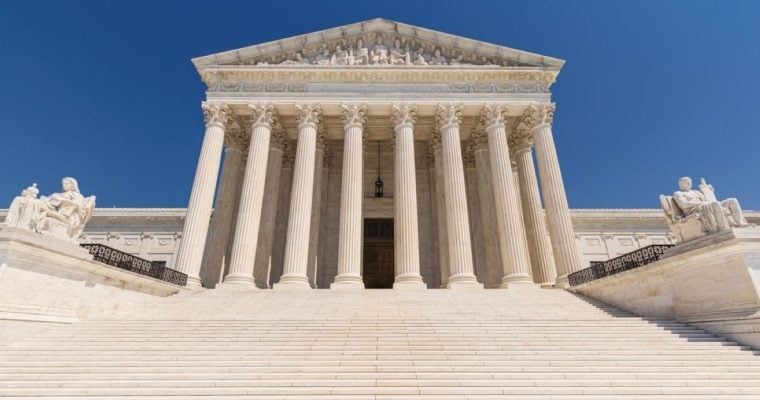
New Jersey has asked the US Supreme Court to review a federal appeals court ruling that sided with Kalshi, escalating a legal fight over whether sports-event prediction markets are federally regulated swaps or state-regulated sports betting.
Two federal appeals courts have now reached opposite conclusions on the same core issue. The Third Circuit ruled for Kalshi in New Jersey, while the Ninth Circuit ruled in Nevada that the contracts are sports bets and not swaps, creating the kind of circuit split that can increase the odds of Supreme Court review.
Circuit split puts Kalshi dispute in front of justices
New Jersey is asking the high court to reverse the Third Circuit’s decision, which held that Kalshi’s sports contracts are swaps traded on a federally designated contract market and therefore fall under the Commodity Futures Trading Commission’s exclusive jurisdiction.
That ruling conflicts with the Ninth Circuit’s decision in Kalshi’s Nevada case. There, the court found that the contracts are sports bets, not swaps, and that the Commodity Exchange Act does not pre-empt Nevada’s gambling enforcement.
New Jersey’s argument is that Kalshi cannot bypass state gambling law simply by listing contracts on a CFTC-designated exchange. In a statement, New Jersey Attorney General Jennifer Davenport said:
“Companies like Kalshi claim to offer legal sports betting in all 50 states, but they refuse to follow the gambling laws of any state.”
New Jersey frames case as gambling enforcement and states’ rights issue
State regulators also argued that some of Kalshi’s offerings conflict with New Jersey law. Mary Jo Flaherty, interim director of the NJ Division of Gaming Enforcement, said Kalshi markets itself as the “first app for legal sports betting in all 50 States,” including wagers on NCAA games held in New Jersey and involving New Jersey teams, which she said is impermissible under the state constitution.
Flaherty added, “This is a states’ rights issue.”
The Ninth Circuit found existing CFTC rules prohibit a registered market from listing contracts involving gaming, and said the CFTC is not a national gambling regulator.
What’s next?
The Supreme Court is not required to take the case, but the split between the Third and Ninth Circuits could strengthen New Jersey’s petition. If the justices decline review, the conflicting rulings would remain in place.
Other prediction market cases are still active or unresolved in the Fourth Circuit and in district courts in Tennessee, Arizona, Ohio, Maryland, and New York, meaning the broader legal fight over sports-event contracts is still unfolding beyond New Jersey and Nevada.
Based on reporting by Pat Evans for DeFi Rate.


